Pichellya Script: A Modern Typeface for Branding
I still remember the moment I opened a blank brand board for a local artisanal skincare line. The client wanted something that felt organic, handcrafted, and slightly imperfect, yet polished enough to sit on a high-end retail shelf. I scrolled through my library of Fonts, bypassing the rigid geometric sans serifs and the overly ornate traditional scripts. That is when I pulled up Pichellya Script. It wasn’t just another digital typeface; it looked like it had been painted moments before. The irregular baseline and the visible texture of the brush strokes gave it an immediate human touch that most vector-based scripts struggle to replicate.
As a brand designer, I am always skeptical of fonts that promise "handwritten" authenticity but deliver sterile uniformity. Pichellya Script, however, belongs to a different category within the Script Amp collection. It feels alive. Created with actual brush and ink, this modern typography choice carries the subtle variations in pressure and angle that occur when a human hand moves across paper. For this review, I tested Pichellya across a realistic boutique identity project, placing it on logo drafts, packaging mockups, business cards, and social media layouts to see how it holds up in professional brand identity work.
The Visual Personality of Pichellya
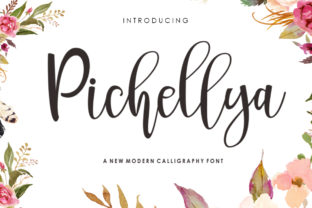
The first thing you notice about Pichellya Script is its mood. It is relaxed but confident. The irregular baseline is its defining characteristic, preventing the text from looking like it was typed on a machine. Instead, the letters dance slightly, creating a rhythm that draws the eye. This makes it an exceptional display font for headers and short phrases where you want to establish an emotional connection quickly.
In terms of style, it sits comfortably between a casual handwritten font and a refined script font. It does not have the heavy swashes of a wedding invitation classic, nor does it have the chaotic energy of a graffiti tag. It is balanced. When I used it for the skincare brand’s primary logo, the font conveyed approachability and natural ingredients without sacrificing professionalism. It suggests that the brand cares about details but does not take itself too seriously. This nuance is crucial for modern consumers who value authenticity over corporate perfection.
Performance in Logo Design and Packaging
Testing Pichellya Script in logo design revealed its strengths as a centerpiece. Because it was created with brush and ink, the strokes have a natural taper and thickness variation that adds depth. On a minimalist product label, such as a serum bottle or a candle jar, the font stands out beautifully against clean, white space. I paired it with a simple, thin sans serif font for the secondary information, and the contrast was striking. The organic curves of Pichellya softened the clinical feel of the sans serif, creating a harmonious visual hierarchy.
However, designers must be mindful of scale. While Pichellya shines as a premium font for headlines and logos, it is not suitable for long body text or small print. The intricate connections between letters can become muddy if scaled down too far. In my testing, I found that it worked perfectly on large packaging elements, such as the front face of a box or a tote bag, but required careful spacing adjustments when used on smaller tags. It is best utilized as an accent font or a headline font rather than a workhorse for paragraphs.
Web Design and Social Media Applications
Beyond print, Pichellya Script translates well to digital spaces, particularly in web design and social media graphics. I implemented it in a website hero section for a creative studio, using it for the main welcome message. The irregular baseline added a dynamic element to the static screen, making the header feel more engaging. It pairs exceptionally well with watercolor backgrounds or textured overlays, enhancing the artistic vibe of the layout.
For Instagram posts and Pinterest pins, Pichellya is a powerhouse. It allows creators to add a personal touch to promotional graphics without needing custom lettering for every post. Whether used for blog headers, quote graphics, or sale announcements, the font maintains readability while adding character. It is particularly effective for industries like weddings, lifestyle blogging, and handmade goods, where the aesthetic is soft, romantic, or rustic. The font’s ability to convey warmth helps increase audience engagement, as viewers perceive the content as more personal and less automated.
Pairing Advice and Design Considerations
One of the most common questions I receive is how to pair a distinctive creative font like Pichellya. The key is contrast. Since Pichellya has so much personality and movement, it needs a stable partner. I recommend pairing it with a neutral sans serif font or a clean serif font with low contrast. Avoid pairing it with other decorative or script fonts, as this creates visual competition and reduces readability.
For example, in a recent editorial design project, I used Pichellya Script for chapter titles and a lightweight geometric sans serif for the body copy. The combination felt modern and airy. If you are working on a more traditional project, a classic serif can ground the whimsical nature of the script, creating a sophisticated look suitable for boutique hotels or upscale cafes.
It is also important to consider what projects are not suitable for this typeface. Pichellya is not ideal for corporate reports, legal documents, or any context requiring strict formalities. Its irregular nature, while charming, can hinder quick scanning in dense information environments. Always test the font in its intended environment before finalizing client work. Check how it renders on different screens and print materials to ensure the brush textures remain crisp and legible.
Licensing and Final Thoughts
Before integrating Pichellya Script into any commercial project, always review the licensing agreement. Whether you are designing packaging design for a product launch, creating templates for sale, or developing a brand identity for a client, understanding the rights associated with the font is essential. Most premium fonts offer different licenses for personal use, commercial use, and webfont embedding. Ensure you have the appropriate license for your specific application, especially if the font will be used on merchandise or digital products.
In conclusion, Pichellya Script is a versatile and expressive addition to any designer’s toolkit. It bridges the gap between raw artistic expression and professional design assets. Its irregular baseline and brush-created origins give it a soul that many digital fonts lack. Whether you are refreshing a café’s visual identity, designing wedding invitations, or crafting social media content, Pichellya offers a unique voice. It reminds us that in a world of perfect pixels, there is still immense value in the beauty of the human hand. For designers seeking a commercial font that feels genuine and warm, Pichellya is a compelling choice that delivers both style and substance.